- Blog
- News & Updates
- Flying to Europe this summer? What wildfires could mean for your flight compensation rights
Flying to Europe this summer? What wildfires could mean for your flight compensation rights

.jpg&w=1920&q=75)
If you've got a European trip booked this summer, you've probably seen the headlines: wildfires in France, Spain and Greece, evacuations, and dramatic photos of smoke over popular destinations. It's a genuinely active fire season across parts of southern Europe — but that doesn't mean your flight is affected, and it doesn't mean you have no protection if it is. Here's how to actually think about it, wherever in Europe you're headed.
Does European law even apply to you?
It's not about your passport. EU rules apply to everyone on a covered flight, no matter where you're from — what decides it is where the flight departs from and which airline operates it:
Flying home from a European airport — anywhere in the EU, on any airline (Delta, American, United, Air France, Lufthansa, Iberia, all of it): covered by EC 261, because the flight departs an EU airport.
Flying to Europe from a US airport on a European carrier (Air France, Lufthansa, Iberia, and others): also covered, because EC 261 protects EU-carrier flights arriving in the EU no matter where they started.
Flying to Europe from a US airport on a US carrier (Delta, American, United): not covered by EC 261 on that leg — US carriers flying into the EU aren't bound by it.
In practice, this means the flight home from almost any US–Europe trip is covered, even when the outbound leg wasn't. Check the operating carrier on both directions, not just the airline printed on your ticket — codeshares can mean a different airline is actually flying the plane.
This summer's fire activity, in brief
As of early August, the most talked-about wildfires are around Bordeaux in southwest France, Madrid and other parts of Spain, and Athens in Greece — all popular gateway cities for American travelers connecting onward to other destinations. The pattern worth knowing: a country having a serious fire season doesn't automatically mean its main international airport is disrupted. Bordeaux's airport kept running commercial flights throughout its fire, with the bigger impact on ground transport and nearby hotels. Athens International Airport has been reported as unaffected by the fire burning nearby, even as that fire made national news. Madrid's airport has seen air traffic control reroute around smoke, which adds delays without shutting anything down.
The takeaway: don't assume your specific flight is affected just because the country is in the headlines. Check your flight status directly with the airline close to your travel date — conditions in an active fire season can change within days.
If EC 261 doesn't apply to your flight, what covers you instead?
For the one case EU rules don't reach — a US-departing flight on a US carrier — you're on US Department of Transportation rules. The DOT's airline customer service dashboard shows what each major US carrier guarantees for delays and cancellations within its control, typically meals and hotel accommodation, but there's no federal requirement for a fixed cash payout the way there is in Europe. Wildfires are exactly the kind of event airlines classify as outside their control, so don't expect much from that dashboard for a wildfire-related disruption specifically — it's more useful for controllable issues like crew scheduling or mechanical problems.
What you're entitled to when EC 261 does apply
A full refund of your ticket, or free rerouting on the next available flight — the airline has to give you the choice, not just a voucher.
Meals, refreshments, and hotel accommodation if you're delayed overnight, plus transport to and from that hotel.
Wildfires count as an extraordinary circumstance under EC 261, similar to severe storms, so cash compensation is unlikely. But the airline still has to prove it took all reasonable steps to limit your specific disruption — rebooking you promptly if a seat was available, for instance. If it can't show that, compensation may still be owed. The burden of proof is on the airline, not on you.
What to do right now, step by step
Check your flight status directly with the airline, and confirm which airline is actually operating each leg if you booked a codeshare or connection.
If you haven't traveled yet, check the US State Department's travel advisory for your specific destination before deciding anything — don't cancel on your own assumption.
If your flight is canceled or delayed 3+ hours, ask the airline in writing what caused it, in case it's citing a wildfire for an unrelated issue.
Keep every piece of evidence: boarding passes, final arrival time, receipts, and any airline correspondence.
Don't accept a travel voucher on the spot unless you're confident it's a fair deal — you may be entitled to a full cash refund instead.
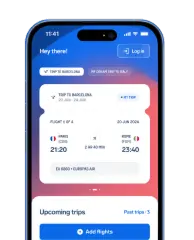
Once you have those details, run a free eligibility check in the AirHelp app — it'll tell you whether your specific itinerary clears the EU-departure or EU-carrier test, wherever in Europe you're flying.
FAQs
I'm flying somewhere in Europe that isn't in the news right now — should I still worry?
Not particularly. Wildfire risk is elevated across parts of southern Europe generally this time of year, but most airports aren't affected even when the surrounding region makes headlines. Check your specific flight status a day or two before you travel.
My outbound flight from the US is on a US airline — am I covered?
Not under EC 261, since that leg is a US carrier departing the US. Your return leg from Europe is covered regardless of which airline operates it, because it departs an EU airport.
Does travel insurance cover this if EC 261 doesn't apply to my flight?
Trip cancellation or interruption insurance can cover costs EC 261 doesn't reach, like non-refundable hotels or missed connections — check your policy's wording on natural disasters and evacuation orders specifically.
How do I find out if my specific destination has an active wildfire risk?
Check the current US State Department travel advisory for your destination close to your travel date, since conditions can change quickly during an active fire season.
Europe's summer fire season can move fast, and headlines don't always tell you whether your specific flight is affected. A free check in the AirHelp app takes the guesswork out of it, wherever in Europe you're headed.