- Blog
- Luggage & Security Rules
- Can You Bring Medication on a Plane? TSA Rules for Flying With Medicine
Can You Bring Medication on a Plane? TSA Rules for Flying With Medicine
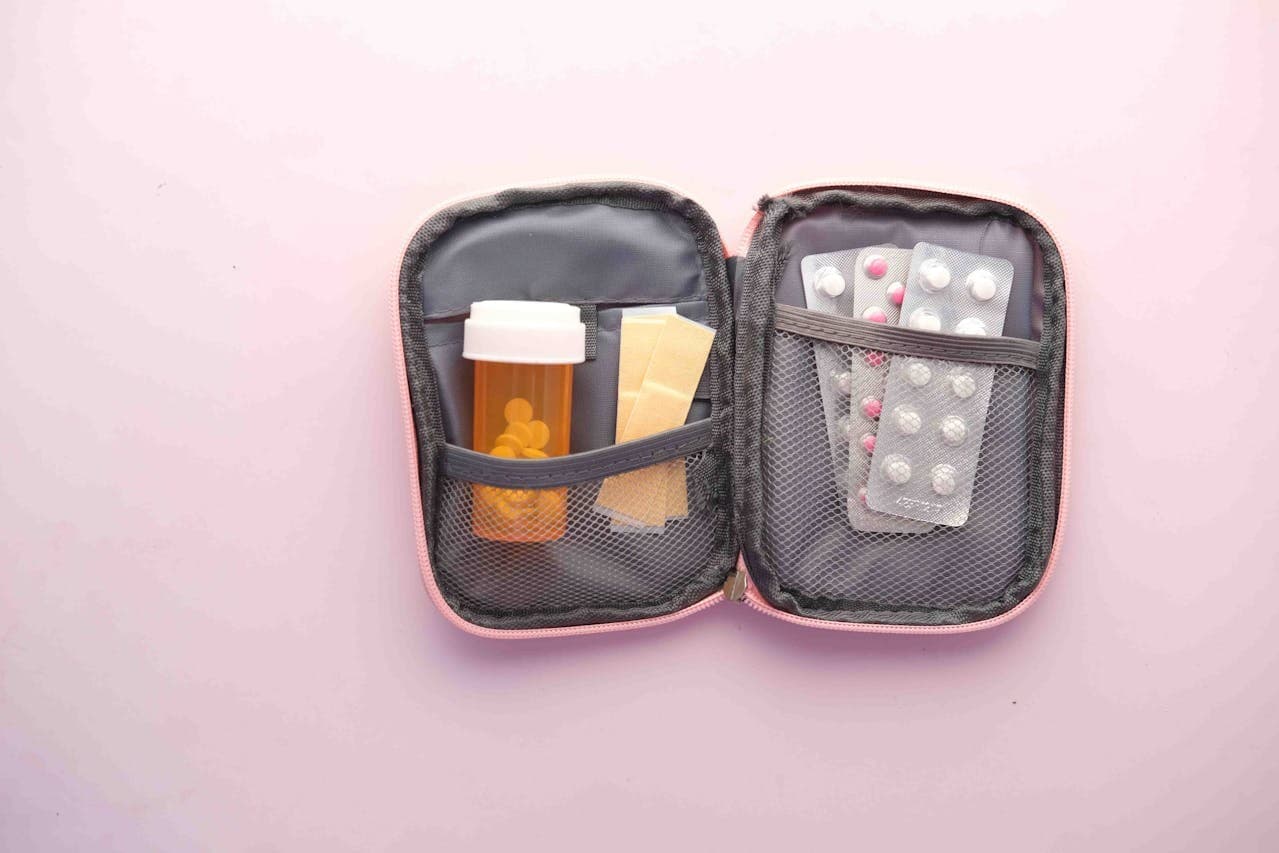
Whether you’re travelling with everyday painkillers or prescription medication, it’s completely normal to wonder: can you take medicine through airport security in the United States?
The good news is that, in most cases, travelling with medication is straightforward. The TSA allows passengers to carry tablets, liquid medicine, insulin, syringes, and most medical equipment on flights, including medically necessary liquids over the standard 3.4 oz (100 ml) limit.
However, some items may require additional screening or documentation — especially liquid medicines, controlled drugs, or larger medical devices. Understanding the rules before you travel can help make airport security faster, easier, and far less stressful.

Image by yana from Pexels.
Can you bring pills, solid tablets and capsules through TSA security?
The good news is that solid medication is usually the easiest type of medicine to fly with in the United States. Common tablets and capsules — including Tylenol, Advil, allergy medicine, vitamins, supplements, and prescription medication — are generally allowed in both carry-on and checked bags without major restrictions.
Unlike liquids, there is no TSA 3.4 oz (100 ml) limit for solid medication, which makes traveling with pills much simpler.
Traveling with tablets in your carry-on bag
You can usually bring tablets and capsules through TSA security without any problem. In most cases, they are treated like regular personal items during screening.
Generally:
You do not need to remove pills or tablets from your bag at security.
They can stay inside your carry-on during TSA screening.
No separate liquids bag or extra tray is required.
The TSA allows solid medication in unlimited quantities, although all items must still go through standard security screening.
While TSA rules do not require medication to remain in its original packaging, keeping medicines clearly labeled is strongly recommended. Original packaging can help TSA officers quickly identify the medication if your bag needs additional inspection.
Tablets in checked baggage
Solid medication is also allowed in checked luggage, and there are generally no quantity limits for normal personal use.
This can be useful for:
Backup medication supplies
Longer trips
Larger vitamin or supplement containers
However, the TSA and most airlines recommend keeping important medication in your carry-on bag whenever possible.
Keep essential medication in your carry-on
Even though pills are allowed in checked luggage, essential medication should always travel with you in the cabin.
Checked bags can occasionally be delayed, lost, or exposed to extreme temperatures in the cargo hold. If you rely on medication during your trip or shortly after landing, keeping it in your carry-on helps avoid unnecessary stress and potential health risks.
A good rule to follow is:
Carry-on bag = essential medication
Checked bag = backup or extra supplies
Do you need documentation for tablets?
For most standard medication, documentation is not required when flying within the United States.
However, it’s still a good idea to carry supporting documentation if you are traveling with:
Large quantities of medication
Controlled substances
Strong prescription medication
Unlabeled pills or containers
Syringes or injectable medication
Helpful documents can include:
A prescription label with your name
A copy of your prescription
A doctor’s note
This becomes especially important for international travel, as medication laws can vary significantly between countries.
Helpful travel tip
Using a clearly labeled pill organizer can make travel easier, especially on longer trips. However, if possible, keep at least some medication in its original packaging to help avoid confusion during TSA screening or customs inspections.

Image by cottonbro studio from Pexels.
Can you bring liquid medication on a plane in the U.S.?
This is the part of airport security rules that can feel the most confusing, especially when flying in or within the United States. The good news is that the TSA allows medically necessary liquid medication in carry-on bags — even when it exceeds the standard 3.4 oz (100 ml) liquid limit.
The two main things that matter are:
How much liquid medication you are carrying
Whether it is medically necessary during your trip
Liquid medicines under 3.4 oz (100 ml)
If your liquid medication is 3.4 oz (100 ml) or less, you can usually pack it in your carry-on bag under standard TSA liquid rules.
In most cases:
No additional documentation is required
The medication can travel in your carry-on
Standard TSA liquid screening rules apply
Like other liquids, these items may need to fit inside your quart-sized liquids bag when passing through security.
Liquid medicines over 3.4 oz in carry-on bags
The TSA makes an exception for medically necessary liquids. This means you can bring liquid medication larger than 3.4 oz (100 ml) in your carry-on bag if you need it for your trip.
This can include:
Liquid prescription medicine
Cough syrup
Liquid pain relievers
Medical creams or gels
Liquid nutrition or supplements
You should remove these items from your carry-on bag and declare them to a TSA officer before screening begins.
Although documentation is not always required, it is strongly recommended to travel with:
A prescription label
A copy of your prescription
A doctor’s note or medical letter
This can help speed up the screening process if TSA officers have questions about the medication.
Additional TSA screening for liquid medication
Medically necessary liquids over the standard limit usually go through additional screening at the security checkpoint.
TSA officers may:
Inspect the medication separately
Test the liquid or container
Ask routine questions about the medication
This is completely normal and usually only takes a few extra minutes.
Liquid medicine in checked baggage
You can also pack liquid medication in checked luggage, and standard TSA liquid limits do not apply there.
However, most airlines and the TSA recommend keeping important medication in your carry-on bag whenever possible.
This is because checked bags can sometimes be:
Delayed
Lost
Exposed to extreme temperatures
A good rule is:
Carry-on bag = essential medication
Checked bag = backup supplies or larger bottles
Ice packs and refrigerated medication
If your medication needs to stay cold — such as insulin or certain injectable medicines — you can bring ice packs, freezer packs, or gel packs through security.
However, TSA rules require these packs to be completely frozen when you pass through the checkpoint. If they are partially melted or contain liquid, they may need additional screening unless declared as medically necessary.
Most airlines do not provide onboard refrigeration for medication, so it’s important to plan ahead with a medical cooling pouch or insulated travel case.
Other medical liquids and sprays
Items such as:
Nasal sprays
Eye drops
Inhalers
Medical creams
Prescription gels
are generally allowed in carry-on bags.
Creams and gels are still treated as liquids by the TSA, although medically necessary items may qualify for exceptions to standard liquid limits.
Helpful travel tip
If you are carrying larger bottles of non-essential over-the-counter medicine, such as cough syrup or liquid vitamins, it may be easier to place the full-size bottle in checked luggage and carry only a smaller travel-sized amount in your carry-on if needed during the flight.
International travel rules may differ
If you are traveling internationally, remember that medication laws can vary widely between countries.
Some destinations may have stricter rules regarding:
Controlled substances
Prescription medication
Liquid medicine quantities
Required documentation
Before international travel, always check the official customs and health regulations for your destination country to avoid problems at security or customs.
Can you fly with controlled substances or prescription medication?
Some medications that are legally prescribed or sold over the counter in the United States contain ingredients classified as controlled substances. Common examples include medicines containing codeine, certain ADHD medications, strong prescription painkillers, sleep medication, and some anti-anxiety drugs.
Because these medications are more tightly regulated, traveling with them can involve additional rules and documentation — especially for international trips.
Check your medication before you travel
If you are unsure whether your medication contains a controlled substance, speak with your doctor or pharmacist before flying.
They can help you confirm:
Whether your medication is considered a controlled substance
Whether you should carry supporting documentation
Whether your destination country has any restrictions on the medication
This is especially important for international travel, since medication laws can vary significantly between countries.
Domestic U.S. travel is usually straightforward
For flights within the United States, controlled medication for personal use is generally allowed through TSA security.
However, it is strongly recommended that you travel with:
Medication in its original packaging
A prescription label showing your name
A copy of your prescription or doctor’s note
While TSA does not strictly require prescription bottles under federal rules, clearly labeled medication can help avoid delays or additional questions during screening.
International travel rules can be much stricter
This is where travelers need to be especially careful. Some medications that are legal in the United States may be restricted or even prohibited in other countries.
Before traveling internationally, always check:
U.S. State Department travel guidance
Embassy or consulate websites for your destination
Local customs and health regulations
Some countries may require:
A doctor’s letter
A copy of your prescription
Prior authorization or import permits
Limits on how much medication you can bring
Documentation translated into the local language
Certain countries enforce strict penalties for carrying controlled substances without the correct paperwork — even if the medication was legally prescribed in the U.S.
Keep controlled medication in your carry-on bag
If you may need your medication during the trip, it’s best to keep it in your carry-on rather than checked luggage.
This helps prevent problems if checked bags are delayed, lost, or inaccessible during connections.
Carry only what you reasonably need
When traveling internationally, it’s best to carry only a reasonable personal-use quantity of controlled medication for the length of your trip.
Large quantities without proper documentation may attract attention from TSA officers or customs officials and could lead to additional screening or delays.
Helpful travel tip
If you’re traveling with controlled medication, organize your paperwork before arriving at the airport. Keeping prescriptions, medical letters, and pharmacy labels easily accessible can make both TSA screening and international customs checks much smoother.
Can you bring medical devices and equipment through TSA?
Traveling with medical equipment — whether it’s an inhaler, insulin pen, CPAP machine, nebulizer, or another essential device — is usually very manageable once you understand the airport and airline rules.
TSA officers and airline staff regularly assist passengers traveling with medical equipment, and in most cases the process is routine. A little preparation before your trip can help make security screening and boarding much smoother.
Insulin, injections, and diabetes supplies
Insulin, insulin pens, glucose monitors, CGMs (continuous glucose monitors), and other diabetes supplies are generally allowed in carry-on bags and are considered medically necessary items by the TSA.
It’s still recommended that you:
Keep insulin in your carry-on bag, since cargo hold temperatures can damage it
Inform TSA officers if you are carrying needles or injection devices
Bring prescription labels or a doctor’s note when possible
If you travel with syringes or sharps, carrying a small travel sharps container can also be useful, especially on longer flights.
Pacemakers and implanted medical devices
If you have a pacemaker or another implanted medical device, let TSA officers know before going through body scanners or metal detectors.
TSA can provide alternative screening procedures if needed to avoid interfering with the device.
It can also help to carry a medical device ID card from the manufacturer or your healthcare provider.
CPAP machines, nebulizers, and other medical equipment
Larger medical devices such as:
CPAP machines
Portable oxygen concentrators
Nebulizers
Infusion pumps
Portable dialysis machines
are generally allowed on flights.
Many airlines also allow medical equipment to be carried onboard in addition to your normal carry-on allowance, provided it meets airline and FAA requirements.
Depending on the equipment, airlines may ask for information such as:
Device name and model
Size and weight
Battery type and battery capacity
Whether the device will be used during the flight
If you plan to use medical equipment onboard, contact the airline at least 48 hours before departure whenever possible. Some airlines may need time to verify that the equipment meets FAA safety standards.
Battery-powered medical devices
If your equipment uses batteries, especially lithium batteries, make sure you check airline requirements before traveling.
In general:
Devices using Wi-Fi or Bluetooth are usually allowed
Devices using cellular transmission may not be permitted during the flight
Spare lithium batteries often need to travel in carry-on bags rather than checked luggage
Bring supporting medical documentation
Traveling with a signed doctor’s letter or medical documentation is strongly recommended, especially for international travel or larger medical equipment.
Your paperwork should ideally explain:
Your medical condition
The medication or equipment required
Any batteries, needles, liquids, or accessories you need to carry
Having documentation ready can help speed up TSA screening and reduce the chance of issues during boarding or customs checks.
TSA screening and X-ray machines
Most medical devices can safely pass through TSA screening equipment. However, if your device should not go through an X-ray machine or body scanner, tell a TSA officer before screening starts.
Alternative screening methods may include:
Manual inspection
Hand searches
Visual inspection
Alternative screening procedures
These are common accommodations for passengers traveling with medical equipment.
Keep essential medical equipment in your carry-on
Important medication and medical devices should always travel in your carry-on bag whenever possible.
Checked baggage can occasionally be delayed, lost, or exposed to extreme temperatures, so anything you may need during the flight or immediately after landing should stay with you.
Important: airlines usually cannot refrigerate medication
Most airlines do not provide onboard refrigeration for passenger medication.
If your medication needs to stay cold — such as insulin or certain biologic medications — travel with an insulated medical cooling pouch or FAA/TSA-compliant travel cooler designed for air travel.
It’s also a good idea to check the manufacturer’s storage recommendations before your trip to make sure your medication stays within a safe temperature range throughout the journey.
From traveling with medication to flying smarter: Know your passenger rights in the U.S.
Understanding how to travel with medication — from TSA liquid rules to flying with medical devices — helps make your airport experience smoother and less stressful. But being prepared for air travel isn’t just about getting through security with your medication safely packed.
It’s also about knowing your rights if something goes wrong during your trip.
Even with modern aircraft, strict safety standards, and highly organized airline operations, travel disruptions still happen every day. Flights get delayed, cancellations occur, bags go missing, and passengers are sometimes denied boarding because of overbooking.
Knowing the TSA rules helps you get to your gate. Knowing your passenger rights helps protect your journey once you’re there.
Flight delays and cancellations
In the United States, airlines are not usually required to automatically compensate passengers for delays. However, travelers still have important protections.
For example:
If your flight is canceled or significantly changed, you may be entitled to a full refund if you choose not to travel — even for many non-refundable tickets.
Airlines generally must offer rebooking options at no extra cost after a cancellation.
Depending on the airline and the situation, passengers may also receive meal vouchers, hotel accommodations, or transportation assistance during major disruptions.
Denied boarding and overbooking
Airlines sometimes sell more tickets than available seats. If you are involuntarily denied boarding because of an overbooked flight:
You may be entitled to alternative transportation or a refund.
You could also qualify for cash compensation depending on how long your arrival is delayed.
Lost, delayed, or damaged baggage
If your checked baggage is delayed, lost, or damaged:
Airlines may be financially responsible up to federal liability limits.
You should report the issue immediately at the airport and keep receipts for any essential purchases made while waiting for your luggage.
Understanding how to travel safely with medication helps you prepare for your flight. Understanding your air passenger rights helps you handle unexpected disruptions with confidence.
Because smart travel isn’t just about getting on the plane — it’s about knowing what to do if your trip doesn’t go according to plan.
.jpg)

