- Blog
- Can planes fly in snow and ice? How winter weather really affects your flight
Can planes fly in snow and ice? How winter weather really affects your flight

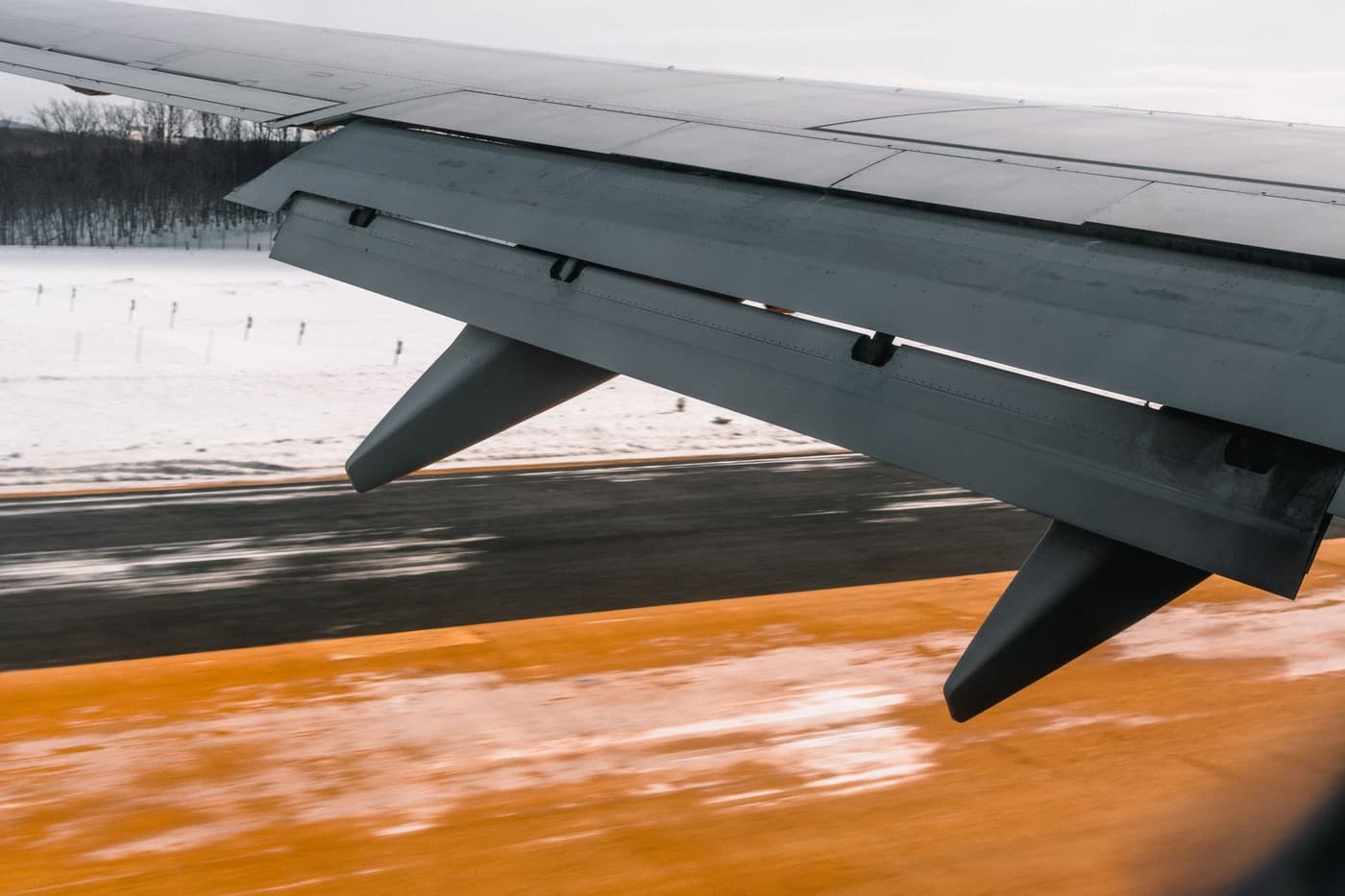
Yes, planes can fly in snow. The aircraft itself handles winter conditions fine. What slows things down is everything that has to happen on the ground first: clearing ice off the wings, clearing snow off the runway, and fitting fewer flights through a busy airport.
Here's what's really going on when winter weather hits your flight, and how to plan around it.
Winter condition | Can planes fly? | Why delays happen |
|---|---|---|
Snow | Yes, once de-iced | De-icing queues and runway clearing |
Frost and ice | Yes, once de-iced | Planes parked overnight often need de-icing before the first flight |
Freezing rain | Often not until it passes | Ice can form faster than de-icing fluid can protect the wings |
Fog | Yes, more slowly | Airports space flights further apart |
Extreme cold | Yes | Ground equipment and crews work more slowly |
Why does snow delay flights?
There are usually three bottlenecks, and none of them is the flight itself.
De-icing. Every plane with snow or ice on its wings has to be sprayed before take-off. When everyone needs it at once, queues build fast.
Runways. Airports close runways for short periods to clear snow. Fewer runways means fewer flights per hour.
Knock-on delays. A plane that's late in the morning stays late all day, so one snowy hub can delay flights across Europe.
How does de-icing work?
De-icing usually happens in two steps, often at your gate or on a dedicated pad near the runway.
Step one: a heated orange or pink fluid removes snow and ice that's already on the plane.
Step two: a thick green gel stops new ice from forming before take-off. It slides off during the take-off run.
The protection doesn't last forever. Pilots work to a "holdover time," which can be anything from a few minutes to a couple of hours depending on the weather. If the plane doesn't take off in time, it has to be sprayed again. That's why you might sit on board after de-icing, and why a plane sometimes heads back for a second round. The spraying itself takes around 10 minutes for most planes. The waiting is usually the longer part.
Can planes take off and land in snow?
Yes. Airports clear runways continuously during snowfall, and pilots get regular reports on how slippery the runway is before they commit to take-off or landing. If the runway can't be kept clear, it closes until it can. That's frustrating, but it's the system working as it should.
Can planes fly in freezing rain?
This is the condition pilots like least. Freezing rain can coat a plane in ice faster than de-icing fluid can protect it, so flights may simply wait until it passes. Even a short spell of freezing rain can cause long delays.
Can planes fly in fog?
Yes. Many modern airliners can land automatically in very thick fog. The problem is capacity. In fog, airports use low-visibility procedures that space aircraft further apart, so fewer flights can operate each hour. In early October, fog caused two days of disruption at Tenerife North Airport, with diversions and cancellations.

An aircraft being sprayed with de-icing fluid
What happened across Europe last winter?
Winter weather caused real disruption at some of Europe's biggest airports in early 2026:
6 January: a snowstorm hit Paris and Amsterdam.
7 January: heavy snowfall led to more than 140 flight cancellations in Paris.
12 January: snow and ice forced cancellations at Frankfurt Airport, as Arctic cold grounded flights across several European airports.
How can you plan around winter weather?
Allow extra time for connections. De-icing and knock-on delays can easily eat a short transfer, so book connections on one ticket.
Check your flight before you leave for the airport, and again before security.
Expect de-icing on early flights. Planes parked overnight often need it, so a short wait before take-off is normal.
Pack for a long day. Keep snacks, a charger, and any medication in your hand luggage.
What are your rights if snow disrupts your flight?
Under EC 261, severe weather usually counts as an extraordinary circumstance, so airlines don't normally have to pay compensation. But they still have to look after you during long delays, with meals, drinks, and a hotel if you're stuck overnight. And if your flight is cancelled, you can choose a refund or a new flight.
When a snowy day can still mean compensation
Weather isn't an automatic excuse. You may still be owed money if:
The airline wasn't prepared. Running short of de-icing fluid or ground crew during predictable winter weather is the airline's responsibility.
Something else caused your delay. A technical fault or missing crew isn't weather, even if it snowed that day.
The airline can't show the weather affected your flight. It has to prove the weather caused your delay, and that it took every reasonable step to avoid it.
If you're owed compensation, the amount depends on how far you were flying. For the full rules, here's when you can still claim compensation for a weather delay.
Flight distance | Compensation |
|---|---|
Up to 1,500 km | Up to €250 |
1,500 to 3,500 km | Up to €400 |
Over 3,500 km | Up to €600 |