- Blog
- Compensation & Passenger Rights
- EC 261 reform 2026: what the new air passenger rights rules mean for you
EC 261 reform 2026: what the new air passenger rights rules mean for you


Picture this. You're at the gate, coffee in hand, when the board flips to "Delayed." Three hours later you finally take off. Annoying — but here's the part most people miss: that delay could still be worth up to €600 to you.
For months, headlines warned that Europe was about to gut these rights. Some of the proposals on the table were drastic — payout cuts of up to two-thirds, and a plan to replace the system with flat €200 payments. So when a deal was finally struck in June 2026, the big question was simple: did passengers lose? The short answer — the core rights held, and you even gained a few new ones. But there's one change you need to act on. Here's the EC 261 reform 2026 in plain English.
At a glance: what you could be owed
Flight distance | Compensation |
|---|---|
Up to 1,500 km | up to €250 |
1,500 to 3,500 km | up to €400 |
Over 3,500 km
| up to €600 |
These amounts are set by law. An airline can't offer you less.
⏰ One thing changed that you need to know now: you have 9 months from your flight date to file a compensation claim with the airline. Don't sit on a disrupted flight — claim as soon as you can.
What changed in the EC 261 reform 2026 — and what didn't
On 13 June 2026, EU lawmakers agreed a revision of EC 261 after thirteen years of negotiation. During the final weeks, the Council floated some severe rollbacks. Most were defeated. The result keeps the framework largely intact and adds several practical protections.
The headline: the money rules you rely on didn't change.
What stayed the same |
|---|
The 3-hour delay rule |
Compensation of up to €600 |
Cover for cancellations and denied boarding |
Your right to care — food, drinks, and a hotel if needed |
What's genuinely new in 2026 |
|---|
One personal item (handbag, laptop bag or small backpack) free in the cabin |
The right to get off the plane after long tarmac delays |
Rerouting on any airline — or even rail or bus — when it's faster |
Automatic refunds for downgrades, and unused vouchers that convert to cash |
A quick note on the "free cabin bag" headlines, because they oversimplify it: the guaranteed free item is one personal item that fits under the seat (up to 40 x 30 x 15 cm). Airlines can still charge for a larger cabin bag — but they now have to show baggage sizes and fees clearly when you book.
When do the new rules actually start? Not yet — but the path is now set. In mid-June 2026, EU negotiators agreed on a final text, breaking a 13-year deadlock. The European Parliament and the Council each have to formally approve it. At this stage they can only accept or reject the text, not change it.
The Parliament's vote is scheduled for July 6–9, 2026, with the Council signing off shortly after. Once it passes, the new rules are published officially, and airlines then get 12 months to adapt. So expect the changes to take effect in practice around late 2027.
The new passenger wins worth knowing
Beyond keeping the core rights, the reform adds protections that solve real travel headaches:
• You can get off the plane during long tarmac delays. If the aircraft sits on the ground with doors closed for more than two hours, the airline must return to the gate and let you off. Throughout any tarmac wait, you're owed water, toilet access, and proper heating or cooling.
• Faster rerouting, on any carrier. When your flight is disrupted, the airline can no longer limit you to its own flights. It must put you on the quickest option — including a rival airline, or even rail or bus — at no extra cost.
• Missed connections are clearer. If a delay on your first leg makes you miss a connection, the airline that ran the delayed flight is responsible for rerouting you, plus meals and a hotel if you're stuck overnight.
• Downgrades get refunded automatically. Bumped to a lower class? You're owed 30% of the fare back on flights up to 1,500 km, 50% up to 3,500 km, and 75% on longer flights — paid within 14 days, without asking.
• Vouchers can't trap your money. You never have to accept a voucher. If you do and don't use it within 12 months, the airline must pay you the full cash value within seven days.
• No more "missed outbound, canceled return." Skipping or missing the outbound half of a return ticket can't cost you the return flight or trigger extra fees.
• Plain-language explanations. Ask why your flight was disrupted and the airline must answer in clear terms within seven days — no hiding behind jargon.
• Small fixes that matter. Reasonable name-spelling errors must be corrected for free, and musicians can bring instruments into the cabin where space and safety allow.
Families and travelers who need assistance gain ground too: a person traveling with a child or with a passenger who has reduced mobility must be offered an adjacent seat free of charge where seats are available, and children in prams now get priority boarding with their pram usable right up to the aircraft door.


When you can claim (and the "extraordinary circumstances" catch)
You can claim when a covered flight is delayed three hours or more, canceled with less than 14 days' notice, or you're denied boarding despite a valid ticket — as long as the cause was within the airline's control.
The big exception is "extraordinary circumstances." That's the legal term for things outside the airline's control. When one applies, the airline doesn't owe the cash payment — but it still has to look after you.
You can usually claim | Usually no compensation (but you still get care) |
|---|---|
Technical or mechanical faults
| Severe weather
|
Airline staffing or scheduling problems | Air traffic control restrictions
|
Most airline staff strikes | Security threats |
Not sure which side your situation falls on? That's exactly the grey area we untangle for you. You can see the full picture in your rights under EC 261.
A real example: the connection you nearly missed
Say you're flying from Rome to New York with a change in Frankfurt. Your first leg leaves 90 minutes late, and you miss the connection. You land in New York more than three hours behind schedule.
Here's the key bit people get wrong: compensation is based on your final arrival time, not the individual legs. A 90-minute delay on its own wouldn't qualify — but because it made you over three hours late to your real destination, and both flights were on one booking with an EU carrier, you could be owed up to €600. Under the reform, the airline that operated that delayed first leg is also on the hook for rerouting you and covering meals and a hotel if needed.
One catch worth knowing: this only holds if your flights were on a single ticket. If you booked the legs separately, the airlines don't have to connect you — we explain exactly where you stand in your rights for self-connecting flights.
Edge cases like missed connections are where a lot of valid claims get quietly dropped. They shouldn't be — see what to do if you miss your flight for the full walkthrough.
What to do the moment your flight is disrupted
1. Ask why. Get the reason in writing if you can. "Technical issue" and "weather" lead to very different outcomes — and the airline now has to explain it in plain language within seven days.
2. Keep everything. Boarding pass, booking reference, and any emails or texts about the delay.
3. Use your right to care. Ask for food and drinks, and a hotel if you're stuck overnight. This applies even when no compensation is due.
4. Don't sign anything that waives your rights. You never have to accept a voucher instead of cash.
5. Save your receipts for any extra costs the delay forced on you.
6. Claim within 9 months. You now have up to 9 months from your flight date to file with the airline — so the sooner, the better.
How to claim your EC 261 compensation
Starting a claim is free. Gather your booking reference and boarding pass, note the reason the airline gave, and submit. You can go directly to the airline, or let AirHelp handle the paperwork and any pushback on a no-win, no-fee basis.
Remember the new 9-month window to claim with the airline — it's tighter than the rules many countries had before, so don't leave it. For the legal nuts and bolts, see everything covered in our Know Your Rights guide, or read how to claim with AirHelp.
FAQ
Did EC 261 compensation amounts change in 2026?
No. You can still claim up to €600, and the three-hour delay rule stayed in place. The Council's push to raise the threshold and cut the payouts didn't make the final deal.
Is there a new deadline to claim compensation?
Yes — and it's the change to watch. You now have a maximum of 9 months from your flight's departure date to file a compensation claim with the airline. File as soon as you can after a disruption.
Is the cabin bag really free now under the new rules?
One personal item is — think a handbag, laptop bag or small backpack that fits under the seat (up to 40 x 30 x 15 cm). Airlines can still charge for a larger cabin bag, but they must show the sizes and fees clearly when you book.
Does the EC 261 reform 2026 apply to UK flights?
Not directly. Since Brexit, UK-departing flights are covered by the UK's own version, UK261. The amounts and the three-hour rule are very similar, but it's a separate set of rules.
Check what you're owed
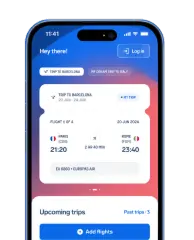
Had a delayed, canceled, or overbooked flight? With the new 9-month deadline, it pays to check now — it could still be worth up to €600. Start a free compensation check in the AirHelp app. It takes a couple of minutes, and there's nothing to pay unless we win.


.jpg%3Ftr%3Df-auto&w=3840&q=75)