- Blog
- Giants of the Skies: The Largest Aircraft Ever Created
Giants of the Skies: The Largest Aircraft Ever Created
Last updated on 10 April 2026

From sleek private jets to vast aircraft that command the skies, aviation has advanced remarkably since the Wright brothers’ first flight. Today, some aeroplanes stand out not only for their innovation, but for their extraordinary size and capability. These giants can carry hundreds of passengers, transport oversized cargo such as military vehicles, and even stretch longer than a football pitch.
From the iconic Airbus A380 to the legendary Antonov An-225 and the pioneering Stratolaunch, these aircraft push the boundaries of what is possible in aviation. Here’s a closer look at the largest aeroplanes ever built — and the remarkable stories behind them.
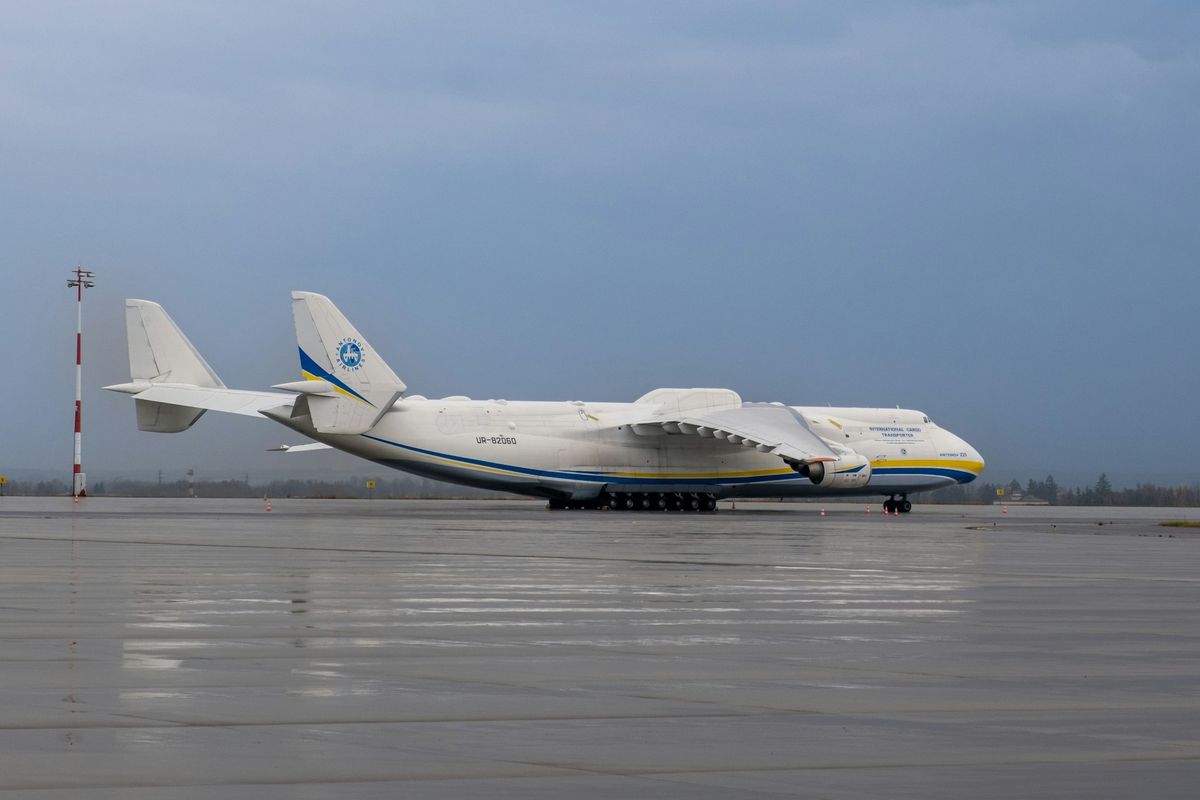
Image by Marquise de Photographie from Unsplash.
Antonov An-225 Mriya: The record-breaking giant of the skies
In the 1980s, the Soviet Union developed its own space programme to rival the U.S. Space Shuttle. A key part of that effort was the Buran spaceplane, which needed a reliable way to be transported after landing. The solution was extraordinary: the Antonov An-225 Mriya, a Ukrainian-designed cargo aircraft unlike anything ever built before.
The name Mriya, meaning “dream” in Ukrainian, reflected both its scale and ambition. With a cargo hold stretching over 140 feet, the aircraft was capable of carrying massive loads — from spacecraft and industrial machinery to rail equipment. At full capacity, it reached a maximum take-off weight of 640 metric tonnes, making it the heaviest aircraft ever to fly — a record that still stands.
The largest aircraft ever built
Until its destruction in 2022, the An-225 was the biggest aeroplane in the world.
Length: 275 ft (84 m)
Wingspan: 290 ft (88.4 m)
Empty weight: 628,000 lb (285,000 kg)
Maximum take-off weight: 1.4 million lb (640,000 kg)
Engines: 6 turbofan engines
It could carry up to 250 tonnes of cargo — roughly the weight of more than 50 adult elephants. Over its lifetime, the aircraft set over 200 world records, including the heaviest single load ever transported by air and some of the longest cargo items in aviation history.
Built for the space race
The An-225 was developed by the Antonov Design Bureau as an evolution of the An-124 cargo aircraft. Engineers extended the fuselage and wings, added a sixth engine, and redesigned the tail to allow the Buran spaceplane to be mounted on top of the aircraft.
Its maiden flight took place on 21 December 1988, and it quickly gained worldwide attention. Just months later, it appeared at the 1989 Paris Air Show, carrying the Buran shuttle on its back — a defining moment that cemented its place in aviation history.
Although additional versions were planned, including a second An-225 and an even larger eight-engine variant, these projects were abandoned following the collapse of the Soviet Union.
A one-of-a-kind aircraft
Only one An-225 was ever completed and flown, while a second airframe remains unfinished in Ukraine.
After the Buran programme ended, the Mriya was repurposed as a specialist cargo aircraft, transporting oversized loads across the globe — from power station components to humanitarian aid. Its rare appearances attracted huge crowds, and aviation enthusiasts closely tracked its movements wherever it flew.
The loss of a legend
In February 2022, during the early days of Russia’s invasion of Ukraine, the An-225 was destroyed while parked in a hangar at Hostomel Airport near Kyiv. The damage was catastrophic, leaving the aircraft beyond repair.
Its loss marked the end of an era. The Mriya was more than just an aeroplane — it was a symbol of engineering ambition, innovation, and the extraordinary possibilities of flight.
Stratolaunch ROC: The aircraft with the widest wingspan ever built
The Stratolaunch ROC was designed with an ambitious vision: to transform how we access space. Backed by Microsoft co-founder Paul Allen, this enormous aircraft was built to function as a flying launch platform, carrying rockets high into the atmosphere before releasing them to continue into orbit.
The concept is both practical and forward-thinking. By launching rockets from around 35,000 feet (10,700 metres), Stratolaunch aims to lower costs, improve flexibility, and make space launches more efficient — particularly for the growing commercial space sector.
A design unlike any other
The Stratolaunch ROC is instantly recognisable thanks to its twin-fuselage layout, with two aircraft bodies connected by a vast central wing. While unconventional in appearance, this design provides the structural strength needed to carry rockets securely between the fuselages.
Its most striking feature is its wingspan of 385 feet (117 metres) — the largest ever built, exceeding the length of a football pitch. The aircraft is powered by six Pratt & Whitney engines, originally developed for the Boeing 747, and can carry payloads of up to 500,000 pounds (250 tonnes).
Key specifications
Length: 238 ft (73 m)
Wingspan: 385 ft (117 m)
Empty weight: 500,000 lb (226,796 kg)
Maximum take-off weight: ~1.3 million lb (590,000 kg)
First flight: 2019
From rocket launches to hypersonic innovation
Originally, the Stratolaunch ROC was intended to launch small rockets into orbit, offering an alternative to traditional ground-based systems. However, following a change in ownership in 2019, the programme shifted focus.
Today, the aircraft is being repurposed as a platform for hypersonic flight testing, supporting the development of next-generation high-speed aircraft and defence technologies.
The ROC has already completed several test flights, steadily expanding its capabilities. While it has yet to carry out a full rocket launch, each mission brings it closer to realising its potential — and highlights its role in shaping the future of aerospace innovation.
Mil V-12: The largest helicopter ever built
While giant aircraft like the Antonov An-225 and Stratolaunch dominate fixed-wing aviation, the title of the largest helicopter ever built belongs to a remarkable Soviet creation: the Mil V-12.
Developed in the 1960s for military use, the V-12 was designed to transport up to 25 metric tonnes of cargo to remote or undeveloped areas where conventional aircraft couldn’t operate. To achieve this, engineers pushed helicopter design to its limits, creating a machine so large it resembled an aeroplane in scale.
The Mil V-12 featured a unique configuration with two enormous rotors mounted side by side on wing-like structures. Each rotor measured around 114 feet (35 metres) in diameter and was powered by a total of four engines, delivering approximately 26,000 horsepower combined.
This setup gave the aircraft exceptional lifting capability:
Maximum take-off weight: 105 metric tonnes
Passenger capacity: up to 200 people
Cargo capacity: heavy military equipment and oversized loads
During testing, the V-12 set a world record by lifting more than 40 metric tonnes (88,000 pounds) — a feat that remains unmatched by any helicopter to this day.
Despite its impressive performance, the V-12 never entered full production. Only two prototypes were ever built. After attracting global attention at the 1971 Paris Air Show, the programme was eventually cancelled as the Soviet Union shifted towards more practical transport solutions.
Although it never became operational, the Mil V-12 remains one of the most extraordinary achievements in aviation history. It pushed the boundaries of what rotary-wing aircraft could achieve and stands as a striking example of Cold War engineering ambition — a true giant of the skies.
LZ 129 Hindenburg: The airship that reshaped aviation
In the early 20th century, airships were seen as the future of long-distance travel. These elegant, gas-filled giants offered a level of comfort and stability that early aeroplanes couldn’t match, with the ability to cross oceans while providing panoramic views and a smooth journey.
The most iconic of them all was the LZ 129 Hindenburg, built by Germany’s Zeppelin Company as the centrepiece of a new era in passenger aviation. Measuring over 803 feet (245 metres) in length and 135 feet (41 metres) in diameter, it remains the longest aircraft ever to take to the skies—longer than three Boeing 747s placed end to end.
Inside, the Hindenburg was designed for luxury. Sixteen hydrogen-filled cells provided lift, allowing it to carry up to 70 passengers and 60 crew members across the Atlantic. Onboard amenities included comfortable cabins, dining areas, and observation decks, creating an experience more akin to a floating hotel than a traditional flight. It could complete a transatlantic crossing in just 43 hours, an impressive feat for the 1930s.
Despite its innovation, the Hindenburg’s design relied on hydrogen, a highly flammable gas. On 6 May 1937, after just 14 months in service and 63 successful flights, disaster struck. While attempting to land in Lakehurst, New Jersey, the airship caught fire and was destroyed in less than a minute.
The tragedy claimed 36 lives and effectively ended the era of passenger airships, forever associating the name “Hindenburg” with one of aviation’s most infamous disasters.
Legacy and the return of airships
The Hindenburg remains a powerful symbol of both the ambition and risks of early aviation. Weighing around 242 metric tonnes, it stands as a reminder of how far engineering pushed the limits of what was possible at the time.
Today, however, airships are making a cautious return—this time with a focus on safety and sustainability. The Hybrid Air Vehicles Airlander 10, currently the largest operational airship, measures 302 feet (92 metres) in length and can carry up to 10 tonnes of cargo or around 130 passengers.
Unlike the hydrogen-filled Hindenburg, modern airships use helium, a non-flammable gas, and generate additional lift through aerodynamic design. The Airlander 10 can remain airborne for days and doesn’t require a traditional runway, with the ability to land on water, ice, or open terrain.
Perhaps most notably, it produces up to 90% fewer emissions than conventional aircraft, signalling a renewed interest in cleaner, more sustainable aviation.
From the ill-fated Hindenburg to today’s next-generation airships, the story of lighter-than-air travel has come full circle. It’s a reminder that innovation often balances ambition with risk—and that even after setbacks, new ideas can rise again in unexpected ways.
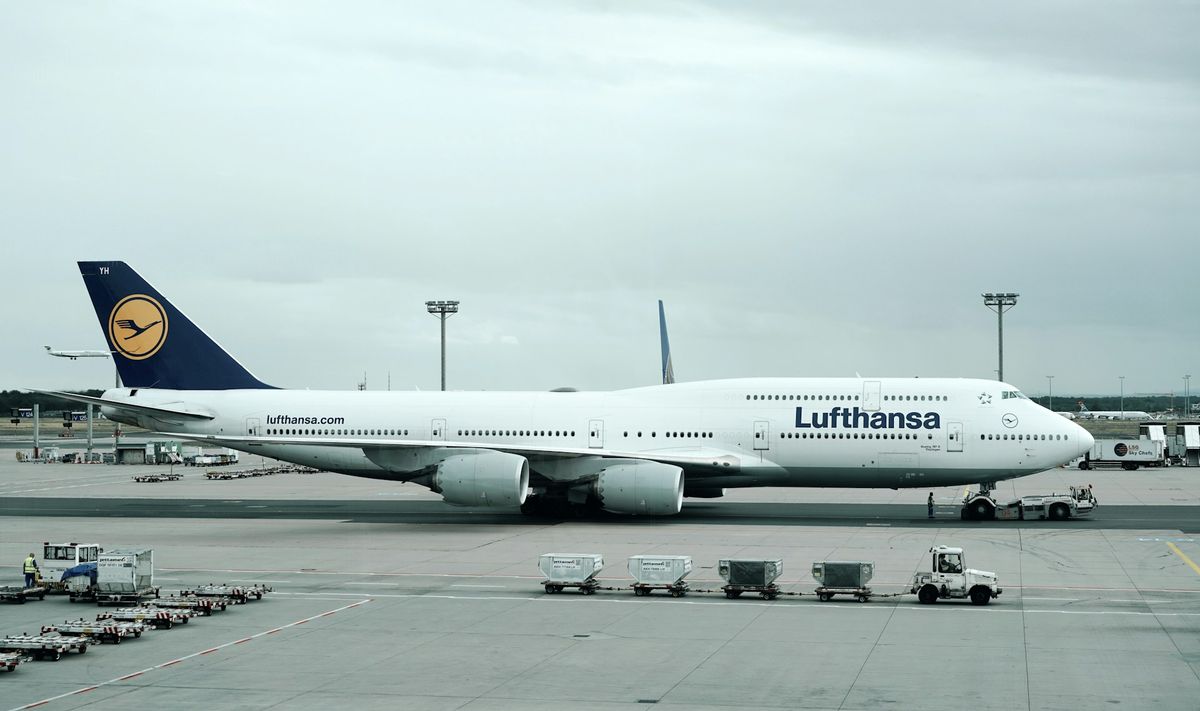
Image by Nick Herasimenka from Unsplash.
Boeing 747-8
The Boeing 747-8 represents the final and most advanced evolution of the legendary jumbo jet known as the “Queen of the Skies.” Built in the United States, it continues the legacy of one of aviation’s most iconic aircraft — a symbol of long-haul travel since the original 747 entered service in 1970.
At 250 feet (76.3 metres) in length, the 747-8 is the longest commercial airliner ever built. It features a wingspan of 224 feet (68.4 metres) and stands nearly 64 feet (19.4 metres) tall, giving it a commanding presence on any runway. With a maximum take-off weight of 442,000 kilograms (975,000 pounds), it is capable of carrying substantial payloads in both passenger and cargo configurations.
The aircraft is produced in two primary versions: the 747-8 Intercontinental, designed for passenger travel, and the 747-8 Freighter, one of the most capable cargo aircraft in operation.
Equipped with advanced GEnx-2B67 engines, the 747-8 offers improved fuel efficiency, lower emissions, and greater range compared to earlier 747 variants. It can carry up to 467 passengers in a typical three-class layout and fly more than 7,700 nautical miles without refuelling.
Although the Airbus A380 later surpassed it in total passenger capacity, the 747-8 remains notable for its combination of range, performance, and unmistakable design. Its distinctive upper-deck hump continues to make it one of the most recognisable aircraft in the world.
First flight: 2010 (747-8F)
Status: In service (passenger and cargo variants)

Image by Henry Siismets from Unsplash.
Antonov An-124 Ruslan
The Antonov An-124 Ruslan is one of the largest and most capable cargo aircraft ever produced. Developed in the Soviet Union during the early 1980s by the Antonov Design Bureau, it was built as a strategic airlifter designed to transport heavy and oversized cargo across vast distances.
Measuring 226 feet (68.96 metres) in length with a wingspan of 240 feet (73.3 metres), the An-124 is an imposing presence. It has a maximum take-off weight of 405,000 kilograms (893,000 pounds) and can carry payloads of up to 150 tonnes, making it one of the most powerful cargo aircraft still in service today.
The Ruslan is powered by four Ivchenko-Progress D-18T turbofan engines, enabling it to handle extremely large and complex loads — from industrial equipment and satellites to aircraft components. Its design features both a nose-loading system and a rear cargo ramp, allowing for fast, flexible, and efficient loading operations.
Although slightly smaller than its more famous counterpart, the An-225 Mriya, the An-124 has enjoyed a far longer operational life. It remains active with military forces and international cargo operators such as Antonov Airlines and Volga-Dnepr, supporting missions ranging from global logistics to humanitarian relief efforts.
First flight: 1982
Status: Still in active service
Lockheed C-5 Galaxy
The Lockheed C-5 Galaxy is one of the largest military transport aircraft ever built and has served as a cornerstone of the U.S. Air Force’s strategic airlift capability for more than five decades. Designed to move extremely heavy loads across long distances without refuelling, it plays a vital role in both military operations and humanitarian missions worldwide.
At 247 feet (75.3 metres) long with a wingspan of 223 feet (67.9 metres), the C-5 is a true heavy-lift aircraft. It has a maximum take-off weight of 381,000 kilograms (840,000 pounds) and can carry up to 140 tonnes of cargo, including tanks, helicopters, or large numbers of troops and equipment.
First flown in 1968, the Galaxy marked a significant advancement in airlift capability. Its design includes both front and rear cargo doors, allowing simultaneous loading and unloading to speed up operations. It also features a kneeling landing gear system, enabling vehicles to be driven directly on and off the aircraft.
The modernised C-5M Super Galaxy variant introduces upgraded GE CF6 engines, improved avionics, and extended range, allowing the aircraft to fly over 6,800 miles (11,000 km) nonstop.
Today, the C-5 Galaxy remains a key asset in global air mobility, supporting everything from military deployments to disaster relief efforts.
First flight: 1968
Status: Active service (C-5M Super Galaxy)
Tupolev Tu-160
The Tupolev Tu-160, known by its NATO designation “Blackjack,” is a supersonic strategic bomber and one of the most powerful combat aircraft ever built. Designed during the final years of the Soviet Union, it continues to play a key role in Russia’s long-range aviation fleet today.
The aircraft measures 177.5 feet (54.1 metres) in length and features variable-sweep wings, which can extend or retract between 117 and 183 feet (35.6–55.7 metres) depending on speed and flight conditions. With a maximum take-off weight of 270,000 kilograms (595,000 pounds), it holds multiple records, including being the largest and heaviest supersonic combat aircraft ever produced.
Powered by four Kuznetsov NK-32 afterburning turbofan engines—the most powerful ever fitted to a bomber—the Tu-160 can exceed Mach 2 and has a range of over 7,500 miles (12,000 km) without refuelling.
First flown in 1981, the Tu-160 was developed as the Soviet counterpart to the U.S. B-1 Lancer, combining speed, long-range capability, and a heavy payload. It can carry up to 40 tonnes of ordnance, including both conventional and nuclear cruise missiles.
Despite its Cold War origins, the aircraft remains in active use today. The upgraded Tu-160M2 variant incorporates modern avionics, improved engines, and enhanced performance, ensuring its continued relevance in modern military operations.
First flight: 1981
Status: Active service with the Russian Aerospace Forces
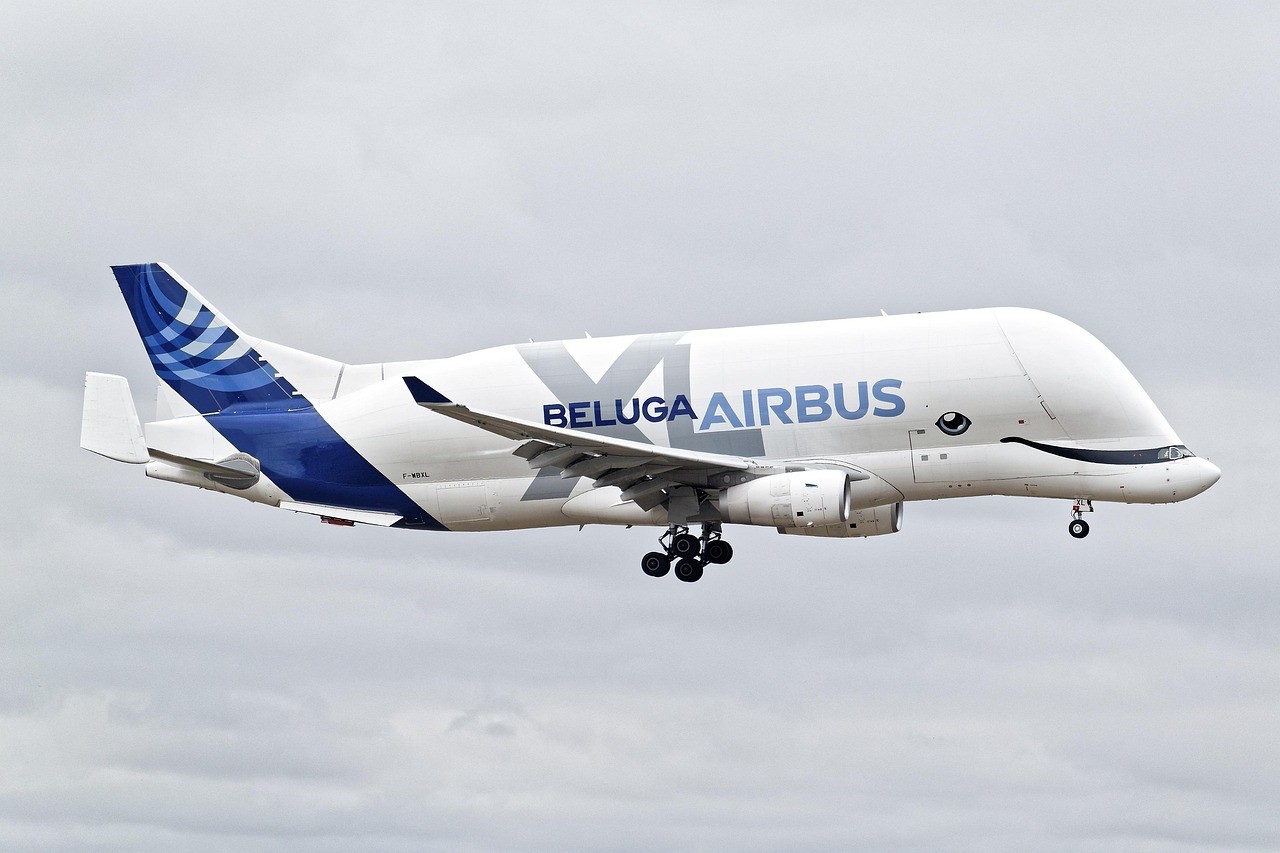
Image by Dylan_Agbagni from Pixabay.
Airbus BelugaXL
The Airbus BelugaXL is one of the most distinctive cargo aircraft ever created, instantly recognisable for its whale-inspired shape. Designed to transport oversized aircraft components between Airbus production sites across Europe, it was introduced as a successor to the Beluga ST to meet growing manufacturing demands.
The aircraft measures 184 feet (56.2 metres) in length, with a wingspan of 147 feet (44.8 metres) and a maximum take-off weight of 155,000 kilograms (342,000 pounds). It can carry payloads of up to 51 tonnes, and its विशाल cargo hold is large enough to transport two Airbus A350 wings simultaneously.
Based on the Airbus A330-200, the BelugaXL combines a proven airframe with a significantly modified fuselage designed specifically for oversized cargo. It entered service in 2019 and features a distinctive “smiling” livery that highlights its resemblance to a beluga whale.
Operated exclusively by Airbus Transport International, the BelugaXL plays a crucial role in Airbus’s internal logistics network, ensuring key components are efficiently moved between manufacturing facilities.
Although its operational lifespan is expected to end around 2025, the BelugaXL remains a highly specialised and innovative aircraft, purpose-built to support modern aviation production.
First flight: 2018
Status: In service (planned retirement around 2025)
.jpg?updatedAt=1763035500912)
Image by Daniel Elebut from Unsplash.
Largest passenger aircraft in the world: Airbus A380-800
The Airbus A380-800 is the largest passenger aircraft ever built. This four-engine, double-deck jet—manufactured between 2005 and 2021—was designed to redefine long-haul travel with unmatched capacity and onboard space. Unlike the Boeing 747, which features only a partial upper deck, the A380 offers two full-length passenger decks, enabling airlines to carry far more travellers in greater comfort.
In a high-density configuration, the aircraft can accommodate up to 853 passengers, although most airlines operate it with around 450 to 550 seats across multiple cabin classes.
Development and entry into service
Airbus began exploring the concept of a superjumbo jet in the late 1980s, aiming to compete with Boeing’s dominance in long-haul aviation. The programme officially launched in 2000, but its complexity led to delays and significant cost increases.
The A380 completed its first flight on 27 April 2005 and entered commercial service with Singapore Airlines in October 2007. With a range of up to 14,800 km (9,200 miles) and a cruising speed of Mach 0.85, it was built to efficiently serve major long-haul routes.
However, by the time it entered service, the aviation market had shifted towards smaller, more fuel-efficient aircraft capable of flying direct routes. As demand for very large aircraft declined, Airbus ended production in 2021 after delivering just over 250 units.
Design and technology
The A380 is enormous by any measure. It is 72.7 metres (238 feet) long, with a wingspan of nearly 80 metres (261.8 feet) and a height of 24 metres (79 feet). Its cabin area—around 550 square metres (5,920 square feet)—offers a quieter and more spacious experience than previous widebody aircraft.
Key features include:
Brake-to-Vacate technology, helping aircraft exit runways more efficiently
Advanced noise-reduction systems, making it one of the quietest large jets
A choice of powerful engines: Engine Alliance GP7000 or Rolls-Royce Trent 900
Legacy and current role
During the COVID-19 pandemic, many A380s were grounded, and some expected the aircraft to be retired early. However, as global travel recovered, airlines such as Emirates, British Airways, and Singapore Airlines returned the aircraft to service, where its high capacity proved valuable on busy international routes.
Airbus has also repurposed its first prototype as part of its ZEROe hydrogen research programme, giving the aircraft a role in the future of sustainable aviation.
Key specifications
Manufacturer: Airbus
First flight: 27 April 2005
Entered service: 25 October 2007
Production period: 2003–2021
Aircraft built: ~250
Length: 72.7 m (238 ft)
Wingspan: 79.8 m (261.8 ft)
Range: 14,800 km (9,200 mi)
Cruising speed: Mach 0.85
Capacity: ~500 typical / up to 853 maximum
Engines: 4 × GP7000 or Rolls-Royce Trent 900
A superjumbo that defined an era
The Airbus A380 was more than just a large aircraft—it was a bold attempt to reshape global air travel. Designed for high-capacity routes between major hubs, it delivered a level of space and comfort rarely seen in commercial aviation.
Although changing industry trends limited its long-term production, the A380-800 remains the largest passenger aircraft in history and continues to serve key international routes, securing its place as one of aviation’s most iconic designs.
World’s largest military aircraft
When it comes to aerial refuelling, the McDonnell Douglas KC-10 Extender ranks as the largest military tanker ever built in terms of fuel capacity. It can carry up to 52,250 gallons of fuel (around 178 tonnes) and fly more than 3,800 nautical miles when fully loaded, making it a vital asset for long-range operations.
However, the KC-10 is more than just a tanker. It can also transport cargo and personnel, adding to its versatility. Measuring 181 feet (55 metres) in length with a wingspan of 165 feet (50 metres), it has supported U.S. Air Force missions around the world for decades.
In terms of overall size and lifting capability, though, the title of the largest operational military transport aircraft goes to the Antonov An-124 Ruslan. This enormous cargo aircraft measures 226 feet (69 metres) in length, with a wingspan of 240 feet (73 metres), and can carry payloads of up to 150 tonnes (165 tons).
Designed for heavy-lift operations, the An-124 features a hinged nose for front loading, a rear cargo ramp, and the ability to operate from rough or remote airfields. It is capable of transporting oversized cargo such as tanks, helicopters, and large industrial equipment with ease.
With its exceptional payload capacity, range, and flexibility, the An-124 remains one of the most capable strategic airlifters in service today.
From record-breaking aircraft to real journeys: know your passenger rights
From the world’s largest aircraft to the engineering behind modern aviation, flying has never been more advanced. But no matter how impressive the plane, your experience as a passenger ultimately depends on something much more practical: how smoothly your journey goes.
Even with careful planning, disruptions are part of air travel. Flights can be delayed, cancelled, or overbooked, and baggage issues are more common than many travellers expect.
That’s where understanding your passenger rights becomes essential.
While aircraft push the limits of size and technology, regulations are there to protect you when things don’t go as planned. If you’re flying within, from, or to the EU or UK—or with an EU/UK airline—you may be covered by EU261 or UK261, which outline your rights during disruptions.
Depending on the situation, you may be entitled to:
Flight cancellations: a refund or alternative flight, and in some cases compensation
Delays of 3+ hours: potential compensation, plus meals or accommodation if required
Denied boarding: compensation and rebooking if you’re bumped from your flight
Baggage issues: reimbursement for lost, delayed, or damaged luggage
From understanding the aircraft you fly on to knowing what to do when things go wrong, smart travel is about more than just the journey—it’s about being prepared every step of the way.