- Blog
- Flight Terminology & Logistics
- How Fast Do Planes Fly? Takeoff Speeds, Records & Key Facts
How Fast Do Planes Fly? Takeoff Speeds, Records & Key Facts

Ever wondered how fast airplanes really travel? Whether you’re watching a jet glide overhead or settling into your seat before take-off, aircraft speed can be both fascinating and surprising. From the moment they accelerate along the runway to when they cruise high above the clouds, planes operate at remarkable speeds. In this guide, we’ll explore how fast aircraft fly during take-off, cruising and landing—and how different types of planes compare when it comes to overall speed.

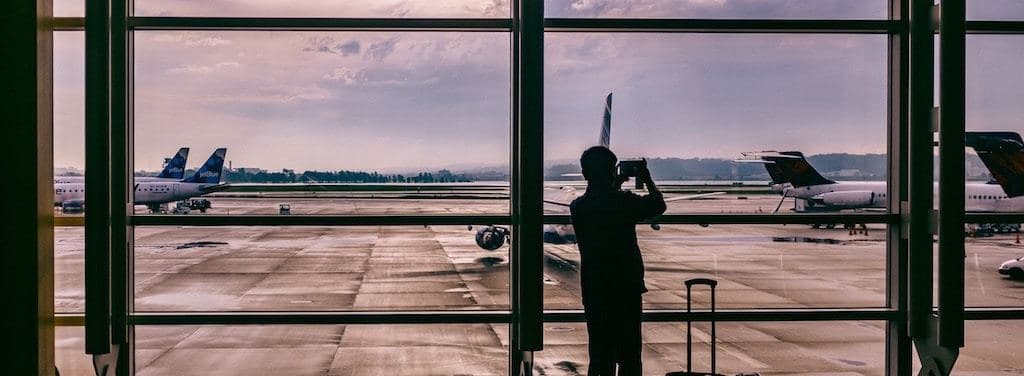
Image by wzdigiphoto from Pixabay.
How fast do commercial planes fly?
Commercial airplanes are remarkable feats of modern engineering, built to carry hundreds of passengers safely and efficiently over long distances. One of their most impressive features is their speed — but how fast do they actually travel?
What is a commercial plane?
A commercial airplane is a non-military aircraft used to transport passengers or cargo between airports. These are the aircraft most people fly on for holidays, business trips, or visiting family.
What affects how fast a plane flies?
Several factors influence an aircraft’s speed:
Altitude: At higher altitudes, the air is thinner, reducing resistance and allowing aircraft to travel faster.
Wind: Tailwinds (winds pushing from behind) increase speed over the ground, while headwinds slow the aircraft down.
Engine power (thrust): More powerful engines enable higher speeds, though capabilities vary by aircraft type.
How is aircraft speed measured?
Aircraft speed isn’t measured in just one way. Pilots use several metrics, typically in knots (1 knot ≈ 1.15 mph):
Indicated airspeed (IAS): The speed shown on cockpit instruments in real time.
True airspeed (TAS): The aircraft’s actual speed through the air, more accurate at higher altitudes.
Groundspeed (GS): Speed relative to the ground, influenced by wind conditions.
Calibrated airspeed (CAS): IAS adjusted for instrument and position errors.
Mach number: Used for high-speed flight, comparing the aircraft’s speed to the speed of sound (Mach 1).
Typical speeds of commercial planes
Aircraft operate at different speeds depending on the phase of flight.
Take-off speed
Take-off speeds vary depending on the aircraft and conditions. For example, a Boeing 737 typically takes off at around 150 to 160 mph (240–280 km/h). Flaps are extended to increase lift and allow a safe departure.
Landing speed
Landing speeds are generally lower. A Boeing 737 usually lands at around 120 to 160 mph, using flaps and spoilers to slow the aircraft safely.
Cruising speed
Once at cruising altitude — typically around 10,000 metres (33,000 feet) — commercial aircraft maintain a steady speed to maximise efficiency.
A Boeing 737 cruises at approximately 560 mph (840 km/h)
Aircraft such as the Airbus A320 operate at similar speeds
At these altitudes, reduced air density lowers drag, allowing smoother and faster travel. These speeds are carefully chosen to balance fuel efficiency, safety, and passenger comfort.
Maximum speed
Commercial aircraft are capable of flying faster than their usual cruising speed, but this is rarely used in practice.
For instance, the Airbus A320 can reach close to 600 mph, but operating at maximum speed significantly increases fuel consumption. Airlines therefore prioritise efficiency over raw speed.
The effect of wind
Wind has a major impact on flight speed:
Tailwinds increase groundspeed and can shorten journey times
Headwinds reduce speed and may extend flight duration
Pilots and flight systems continuously adjust routes and altitudes to make the most of favourable wind conditions.
Fuel efficiency and speed
Fuel consumption is closely linked to speed. Flying at an optimal cruising speed helps reduce fuel use and emissions, which is essential for both environmental and economic reasons.
Maximum speeds of popular aircraft
Here’s how some well-known commercial aircraft compare at top speed:
Airbus A380: ~737 mph
Boeing 747: ~614 mph
Boeing 737: ~588 mph
In practice, these aircraft typically fly slightly below these speeds.
Other factors that affect aircraft speed
Weather conditions: Winds and atmospheric conditions influence overall speed
Aircraft type: Larger long-haul jets perform differently from smaller regional or turboprop aircraft
Altitude: Higher altitudes generally allow faster and more efficient flight
Why don’t planes fly at maximum speed?
Although aircraft can travel faster, doing so significantly increases fuel consumption and operating costs. Airlines therefore aim for speeds that balance efficiency, reliability, and sustainability.
How fast do other airplanes fly? A complete guide to aircraft speed
When it comes to aviation, speed plays a key role — but how fast do different types of aircraft actually travel? From commercial airliners and private jets to advanced military aircraft, here’s a closer look at how speeds vary across the skies and what influences them.
Private jets vs commercial aircraft
Private jets, although smaller, are often faster than commercial airliners. Thanks to their lighter weight, powerful engines and ability to fly more direct routes, they can reach speeds of 600 to 700 mph.
For example, the Gulfstream G650 cruises at around 610 mph, offering a faster and more flexible travel experience compared to scheduled airline services.
Military jets: the fastest aircraft in operation
Military aircraft operate at an entirely different level of performance. Jets such as the F-22 Raptor can exceed 1,500 mph, easily breaking the sound barrier.
Many military jets fly at Mach 2 or higher, meaning more than twice the speed of sound. The fastest of them all, the SR-71 Blackbird, reached speeds of over 2,100 mph (Mach 3.3).
Aircraft speed by type
Aircraft speed varies widely depending on design and purpose. Here’s a general comparison:
Commercial jets: 500–600 mph
Boeing 747: ~570 mph
Private jets: 600–700 mph
Gulfstream G650: ~610 mph
Propeller aircraft: up to 300 mph
Beechcraft King Air 350: ~312 mph
Helicopters: 150–250 mph
Airbus H160: 200+ mph
Military jets: 1,200–2,100+ mph
SR-71 Blackbird: 2,100+ mph
Single-engine aircraft: 120–300 mph
Pilatus PC-12 NGX: ~334 mph
Cargo aircraft: 500–600 mph
Boeing 747-400F: ~590 mph
Breaking the sound barrier: how does it work?
The speed of sound at sea level is roughly 767 mph. When an aircraft exceeds this, it enters supersonic flight, producing a sonic boom — a shockwave that can be heard on the ground.
Only a limited number of aircraft are capable of this, including military jets and the retired Concorde.
How fast was the Concorde?
The Concorde could fly at over 1,350 mph (Mach 2), reducing journeys such as London to New York to under 3.5 hours. Although retired in 2003, it remains an iconic example of supersonic passenger travel.
Aviation speed records
Fastest manned jet: SR-71 Blackbird – 2,100+ mph
Fastest aircraft ever: North American X-15 – over 4,500 mph (Mach 6.7)
Fastest interceptor: Mikoyan-Gurevich MiG-25 – 2,190 mph
The future of aircraft speed
While commercial aviation prioritises efficiency, safety and cost, military and experimental aircraft continue to push the limits of speed. Advances in aerodynamics, propulsion and sustainable technology could pave the way for a new era of faster travel — potentially bringing back supersonic or even hypersonic passenger flights.
From understanding how fast aeroplanes fly to travelling smarter: Know your passenger rights
Learning how fast aeroplanes travel — from take-off to cruising altitude — offers a fascinating insight into modern aviation. However, even with highly advanced aircraft and well-planned journeys, disruptions can still occur.
Flights may be delayed, connections missed, luggage can go missing, and passengers are sometimes denied boarding due to overbooking. That’s why travelling smart isn’t just about understanding how flying works — it’s also about knowing your rights when things don’t go to plan.
Understanding aircraft speed explains the journey. Understanding your passenger rights helps protect it.
If you’re flying within, from, or to the UK or the EU — or travelling with a UK or EU airline — you may be covered by regulations such as UK261 or EU261, which are designed to ensure passengers are treated fairly during disruptions.
Here’s what that can mean for you:
Flight cancellations: If your flight is cancelled, you may be entitled to a refund or rebooking, and in some cases compensation of up to €600, depending on the route and circumstances.
Delays of 3+ hours: If you arrive at your destination more than three hours late due to an issue within the airline’s control, you could be eligible for compensation. Airlines may also be required to provide meals, refreshments, and overnight accommodation when necessary.
Denied boarding (overbooking): If you’re denied boarding against your will because a flight is overbooked, you may have the right to compensation and alternative transport.
Knowing how planes fly helps you appreciate the science behind air travel. Knowing your rights helps you handle the unexpected.
Because smart travel isn’t just about speed — it’s about being prepared for whatever happens along the way.