- Blog
- Luggage & Security Rules
- Can you bring food through airport security?
Can you bring food through airport security?

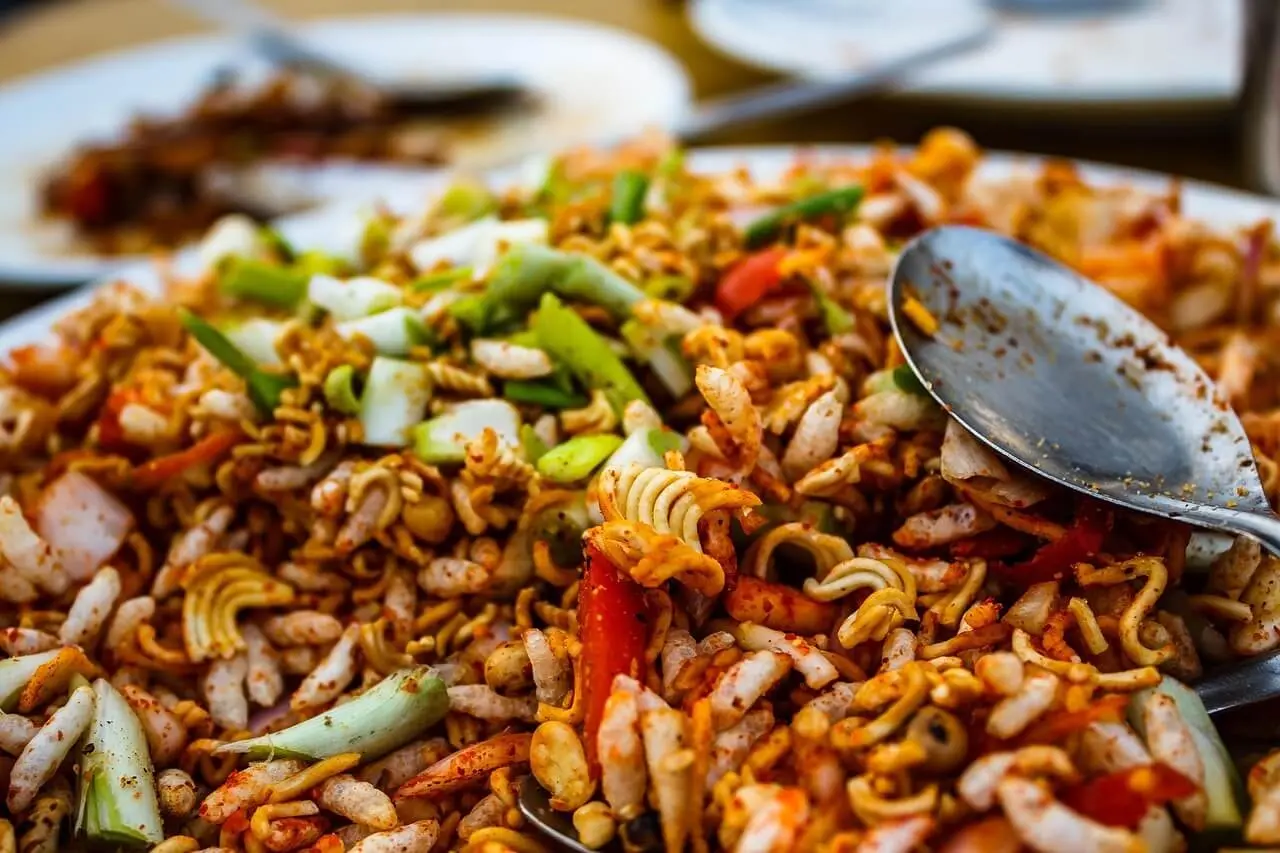
Short answer: yes — solid food is fine through security, in both your hand luggage and your hold bag, with no size limit. The only thing to watch is liquids and spreadable foods, which follow the 100 ml rule in your hand luggage.
Packing your own food saves money and means you’re not at the mercy of whatever’s left at the gate. But the rules trip people up constantly — a bag of crisps sails through while a pot of yogurt gets pulled, and most travelers have no idea why. And in 2026, there’s a new wrinkle: Europe’s liquid limits are no longer the same at every airport. Below you’ll find the simple logic behind the rule, the 2026 change worth knowing, and a straight answer for every food you might want to pack.
At a glance: what you can and can’t bring
Generally allowed (any amount):
Sandwiches, wraps, rolls
Fresh fruit and vegetables
Crisps, crackers, biscuits, nuts
Chocolate and sweets
Cooked meat, hard cheese, boiled eggs
Cakes and solid baked goods
Restricted in hand luggage (100 ml rule):
Soup and broth
Yogurt and custard
Hummus, dips and nut butters
Jam, honey and syrup
Smoothies and drinks
Soft cheese, pâté, cheesecake
The rule of thumb: if it’s solid, it travels. If it pours, spreads or sprays, security treats it as a liquid — no matter how "snack-like" it feels.
The one rule that decides everything
Airport security splits food into two groups: solids and liquids. Solid food has no size limit — you can carry an entire picnic in your hand luggage if you want to. Liquids, gels and anything spreadable are capped at 100 ml per container, and they need to fit inside one clear, resealable bag of up to 1 litre.
This isn’t arbitrary. The limit dates to 2006, after a foiled plot to smuggle liquid explosives onboard in drink bottles. 😲 The EU’s response was a cap on hand-luggage liquids set low enough that no single container could hold a dangerous amount. It applies at every airport in the EU — plus Norway, Iceland and Switzerland — for all passengers, whatever their destination. The official wording is on the EU’s Your Europe luggage rules page, and the detail of what counts as a liquid sits with the European Commission’s guidance on liquids, aerosols and gels.
Crucially, the EU defines "liquid" broadly: it covers gels, pastes, lotions and "liquid/solid mixtures of similar consistency" — which is exactly why soups, syrups and jams get caught. There’s a full breakdown in our guide to carrying liquids on a plane.

Image by Denny Müller from Unsplash.
Why a sandwich passes but a yogurt doesn’t
Here’s the part that surprises people. Security doesn’t sort your food by whether it’s a "meal" or a "snack." It sorts by physics. A solid holds its own shape. A liquid takes the shape of whatever container it’s in. That single distinction decides everything at the checkpoint.
A sandwich keeps its shape, so it’s a solid — it passes. Yogurt, soup, hummus and apple purée all take the shape of their container, so they’re screened as liquids and capped at 100 ml. That’s also why a jar of peanut butter is a "liquid," but the exact same peanut butter spread on bread is a solid — the so-called "sandwich loophole." The peanut butter hasn’t changed; its shape has. Once that test is in your head, you’ll never be caught out again — soft cheese spreads, so it’s a liquid; hard cheese holds its shape, so it’s a solid. For everything beyond food, the same logic runs through our wider guide to what you can bring on a plane.
The 2026 twist: Europe’s liquid rules are changing
For nearly twenty years, the answer to "how much liquid can I bring?" was a flat 100 ml across Europe. In 2026, that’s no longer the whole story — and it’s where most guides are now out of date.
A growing number of EU airports have installed advanced explosive-detection (CT) scanners that can screen larger containers safely. After a stop-start rollout — the European Commission paused the technology in 2024 over a technical issue, then re-approved it in 2025 — airports including Rome, Milan, Amsterdam and Berlin now allow liquids in containers of up to 2 litres in hand luggage. At those airports, you may not even need to take liquids out of your bag.
But here’s the catch that trips people up: there’s no requirement for airports to upgrade, and the scanners are expensive, so most still enforce 100 ml. That creates a patchwork — you might fly out from a 2-litre airport with a full-size bottle, then have to bin it on the way home through an airport that still runs the old rule. The safe move in 2026 is simple: pack for 100 ml unless you’ve confirmed that both your departure and return airports have the new scanners.
Can you bring snacks through airport security?
Yes — snacks are one of the easiest things to travel with. Pre-packaged snacks are especially convenient because they’re sealed, labeled and simple for security staff to identify. Cereal bars, crisps, nuts, chocolate and sweets are all fine in hand luggage and don’t count as liquids. If you’re traveling with children, have allergies, or need specific dietary foods, your own snacks make the journey much smoother — just be ready to place them in a separate tray if asked. As a general rule, stick to solid, dry foods in sealed packaging.
Can you take homemade food through airport security?
Yes — homemade food is allowed, as long as it follows the same solid-food logic. Baked goods, undressed salads and simple home-prepared meals are usually fine in hand luggage. The thing to avoid is anything saucy, soupy or likely to leak: a dry pasta salad is fine, spaghetti in sauce is not; a lightly dressed sandwich is fine, a container with liquid pooling at the bottom may be refused. Pack homemade food in airtight, resealable containers — clear ones screen faster, while foil may prompt an extra check. Once airside, you can eat your own food on board; it’s just polite to skip strong smells on short flights.

Image by Stephen Lartey from Unsplash.
Can you bring a sandwich through airport security?
Yes — sandwiches are completely allowed, including homemade ones. Cheese, chicken, tuna or a vegetarian filling, there’s no rule stopping you taking a sandwich in your hand luggage. The only thing to watch is excess moisture: a sandwich loaded with sauce, chutney or dressing can leak and draw extra attention if liquid seeps from the packaging. Wrap it tightly or use a sealed container, and it’s one of the most practical foods to bring on a plane.
Can you bring fruit through airport security?
Yes — fresh fruit is allowed and makes a healthy travel snack. Apples, bananas, grapes and cut fruit are all fine in hand luggage when properly packed. The one caveat is international travel: while EU security will let fruit through, customs at your destination may not, as many countries restrict fresh fruit on arrival. To be safe, eat fresh fruit during the flight or before landing. Dried fruit and other processed fruit snacks are rarely a problem.
Can you take fresh food on the plane?
Fresh food such as vegetables, raw meat, seafood and eggs can usually go through EU airport security if properly sealed. But keep two different rules in mind: security rules decide what you can take through the airport, while customs rules decide what you can bring into another country. Vegetables and meat may pass security, yet be banned on arrival — fruit, dairy and meat are the usual culprits, and the EU restricts many of these for arrivals from outside the bloc. If you’re flying internationally, check your destination’s customs regulations, and when in doubt, finish fresh food before you land.
Can you bring cheese or even cheesecake through airport security?
This is where the confusion usually starts — because even something that looks solid can be classed as a liquid, paste or gel. Hard cheeses hold their shape and travel as solids, no problem. But soft cheeses such as brie, camembert and blue cheese spread, so they’re treated as liquids: in hand luggage they must be 100 ml or less in your clear liquids bag. The same goes for creamy desserts like cheesecake, plus jam, honey, peanut butter, pâté, hummus and yogurt. Canned foods can also cause hold-ups, as they contain liquid and are hard to scan clearly. For anything borderline, the easy fix is to pack it in your hold luggage.
Can you bring spreads and other borderline foods through security?
Spreads cause the most confusion of all, because they’re edible but behave like liquids. Under EU rules, jam, yogurt, peanut butter, honey, salad dressing, dips and other spreads must follow the standard liquids policy: containers of 100 ml or less, inside your clear 1-litre bag. Security treats them just like toiletries or drinks. So yes, you can bring jam through security — but only under the liquids limit, which a normal jar will exceed. The simplest rule: if it spreads, pours or contains sauce, it falls under the 100 ml rule, so pack the full-size version in your hold luggage.

Image by Jonas Kakaroto from Unsplash.
Can you bring drinks through airport security?
Mostly no — drinks are among the most commonly confiscated items at security. Any drink, including water, juice, soft drinks, tea, coffee and even distilled water, is a liquid and must follow the 100 ml rule, fitting inside your clear bag. Larger bottles will be taken at the checkpoint. The exceptions are baby milk and baby food (allowed in larger quantities if you’re traveling with an infant), and alcohol, which has its own strength and quantity limits. Once you’re through security, you’re free to buy drinks airside or bring them onto the plane.
Can you bring an empty water bottle through airport security?
Yes — an empty bottle is one of the easiest ways to save money while traveling. Security only cares about liquids, not the bottle itself, so as long as it’s completely empty at the checkpoint it passes through fine. Most airports have fountains or refill stations airside where you can fill it for free. Remember that even plain water isn’t allowed through if it’s in the bottle — empty it before screening, then refill once you’re airside. Reusable bottles are especially handy on long journeys and during delays.
Can you bring baby food through airport security?
Yes — security makes important exceptions for infants. If you’re traveling with a baby or toddler, you can bring baby food, infant formula, breast milk, baby juice and sterilized water without following the 100 ml rule. These items must be declared at security and will usually be screened separately — officers may open or test containers, which is standard procedure. Bring only what you reasonably need for the journey and keep it easy to reach. Essential liquid medicine is treated the same way; our guide to flying with medication covers the documentation worth carrying.
Can you take food in your suitcase or hold luggage?
Yes — your hold bag gives you far more flexibility. Unlike hand luggage, checked bags aren’t restricted by the 100 ml rule, so jam, sauces, yogurt, honey, spreads and canned goods can all go in your suitcase. The main thing to manage is leakage: bags are stacked and thrown around in transit, so seal anything liquid tightly and cushion glass jars to prevent breakage. As ever on international trips, customs rules at your destination may restrict meat, dairy or fresh produce, so check local import rules before packing food in your suitcase.
Practical tips to clear security faster
Do pack snacks near the top of your bag so you can grab them if asked.
Do wrap sandwiches and anything moist in a sealed, ideally clear container.
Do move spreadable favorites (hummus, jam, nut butter) into your hold bag.
Don’t bring drinks through — buy them airside or fill an empty bottle.
Don’t assume soft or "squishy" food is solid; if it spreads, it’s a liquid.
Don’t rely on a 2-litre allowance unless you’ve checked both airports have the new scanners.
Travel prepared: from the security tray to knowing your rights
Once you know what food clears security, you’re already a calmer, smarter traveler. Packing your snacks correctly and getting the liquids rule right means your trip starts without a fuss at the checkpoint. But confident travel isn’t only about getting through security with your yogurt intact — it’s also about knowing what to do when a journey doesn’t go to plan.
Even with strict safety standards and tightly regulated airlines, disruption still happens. Flights run late, connections slip away, bags go missing, and now and then passengers are bumped because a flight was overbooked. Knowing the airport rules helps you sidestep the small annoyances; knowing your air passenger rights helps you handle the big ones.
If you’re flying from the EU — or into the EU on a European airline — you’re protected by EC 261, the EU regulation that holds airlines accountable when a disruption is within their control. It sets out when you’re owed care, a refund, or compensation, and the amounts are fixed by law. Here’s what that means in practice:
Cancellations: if your flight is canceled with less than 14 days’ notice, you can choose between a refund or rerouting — and where the airline is at fault, you may also claim compensation of up to €600, depending on distance and circumstances.
Delays over 3 hours: arrive at your destination more than three hours late through the airline’s fault and you could be owed up to €600. The airline must also look after you with meals and, if you’re kept overnight, accommodation.
Denied boarding (overbooking): if you’re bumped against your will because a flight is oversold, you’re entitled to compensation and a seat on an alternative flight to your destination.
Baggage problems: lost, delayed or damaged luggage is covered under the Montreal Convention, with reimbursement of up to around €1,900 depending on your loss.
Knowing which snacks make it through security helps you prepare for the journey. Knowing your passenger rights helps you stay in control of it. Because travel isn’t just about getting from A to B — it’s about knowing exactly what to do if something goes sideways along the way.
Frequently asked questions
Can you bring cookies or biscuits through airport security?
Yes. Cookies and biscuits are solid, dry foods with no size limit in hand luggage. Keep them in packaging or a sealed container so they’re quick to screen.
Can you bring sushi through airport security?
Yes — sushi is considered solid food. Pack it in a sealed container to prevent leaks or smells. If it contains raw fish, eat it soon after security rather than saving it for later.
Can you bring bread through airport security?
Yes. Bread is solid and unrestricted — a loaf, rolls, bagels or sliced bread all pass fine. Keep it wrapped so it stays fresh and doesn’t get squashed.
Can you bring meat through airport security?
Usually yes, if it’s properly packed and not sitting in excess liquid. The bigger issue is customs at your destination, as many countries restrict meat — check local import rules before flying internationally.
Can you bring sweets or chocolate through airport security?
Yes. Sweets and chocolate are solid foods with no size limit in hand luggage. In hot weather, pack chocolate where it won’t melt onto the rest of your bag.
Can you take crisps through airport security?
Yes. Crisps are dry, solid snacks with no restrictions. The sealed bag may puff up with cabin pressure changes, which is harmless.
Can I bring a cake through airport security?
Yes — a solid, un-iced or firmly iced cake travels fine in hand luggage. Very gooey or liquid-topped cakes can be treated as a paste, so a sturdy sealed box is your friend.
Can I bring yogurt through airport security?
Only under the liquids rule. Yogurt spreads, so it’s a liquid: in hand luggage it must be 100 ml or less in your clear bag. For a normal pot, pack it in your hold luggage instead.
Pack smart and fly prepared
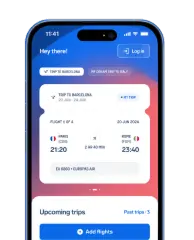
Knowing what passes security is half the battle — the other half is staying ahead of delays. The AirHelp app tracks your flight in real time and tells you the moment you’re owed up to €600 for a delay, cancellation or missed connection. Pack your snacks, download the free AirHelp app, and fly prepared.

.jpg)

